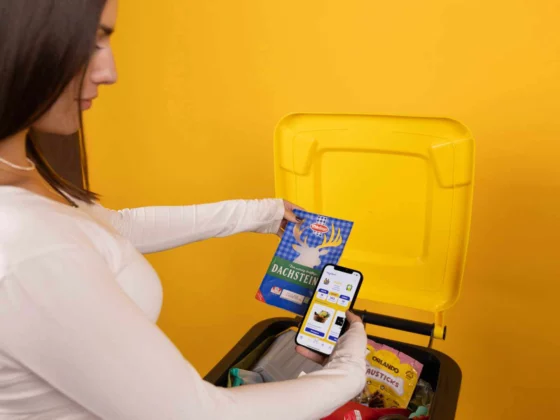
Eco-design is at the heart of the transition towards a circular and sustainable economy. It consists of integrating environmental considerations from the design stage of a product or its packaging, in particular by optimising its recyclability, reuse or carbon impact.
In a context where regulatory requirements such as the PPWR are becoming increasingly stringent and consumer expectations are evolving, this glossary aims to demystify the technical terms of eco-design, as well as those related to impact calculation, to help CSR, packaging and marketing teams communicate more effectively with one another.
Below is a list of 51 key terms related to eco-design, each accompanied by a clear and concise definition.
Design & Innovation
1. Eco-conception
An approach that integrates environmental considerations from the design stage of a product or service, through transport and use, and of course, the product’s end-of-life.
2. Eco-Design
A synonym for eco-design, often used in the field of furniture design or consumer products manufactured from a technical blueprint.
3. Sustainable design
A holistic company approach integrating social, environmental and economic impacts from the design stage of the product or service.
4. Cradle-to-cradle / systemic design
Taking into account the entire production system from raw material extraction upstream, product use (energy resource consumption) and the impact of end-of-life processing, including impacts on systems and ecosystems from recycling or landfill.
5. Eco-Innovation
If innovation in an economic system is defined as the design of a new product, service, manufacturing or organisational process that can be directly implemented in existing production facilities and better meets consumer needs, eco-innovation is the act of producing this innovation whilst reducing environmental impacts compared to the original product. Also referred to as eco-design.
6. Frugal design / appropriate technology
imple design, economical in resources and adapted to essential human needs. Simple, durable and repairable technological solutions powered by human, wind or animal energy. Examples: a bicycle that generates electricity, animal traction for tilling the land, a pedal-powered mechanism, etc.
7. LowTech
Simple, sustainable, and repairable technological solutions. These machines, designed using low-tech principles, are powered by motion generated by human energy, wind, or animals. Examples include a bicycle that generates electricity, a soil-turning system powered by cattle or horses, or a pedal-powered mechanism.
Example: the Seabin Project and its waste collection device used in harbors.
© La Ligue des Optimistes
8. Lightweighting
Reduction, partial or total elimination of certain elements so as to reduce material content without loss of functionality. For example, designing packaging or a product with honeycomb cells to reduce weight whilst maintaining structural integrity.
9. Dematerialisation
Reduction in the use of physical media in favour of digital formats, such as replacing paper instruction leaflets with a downloadable document accessible via a smartphone.
Impact Assessment & Indicators
10. Life Cycle Assessment (LCA)
Assessment of the environmental impacts of a product throughout its lifecycle, across numerous criteria. For example, the PEF (Product Environmental Footprint) methodology encompasses 16 impact criteria at the European level.

11. Lifecycle / value chain
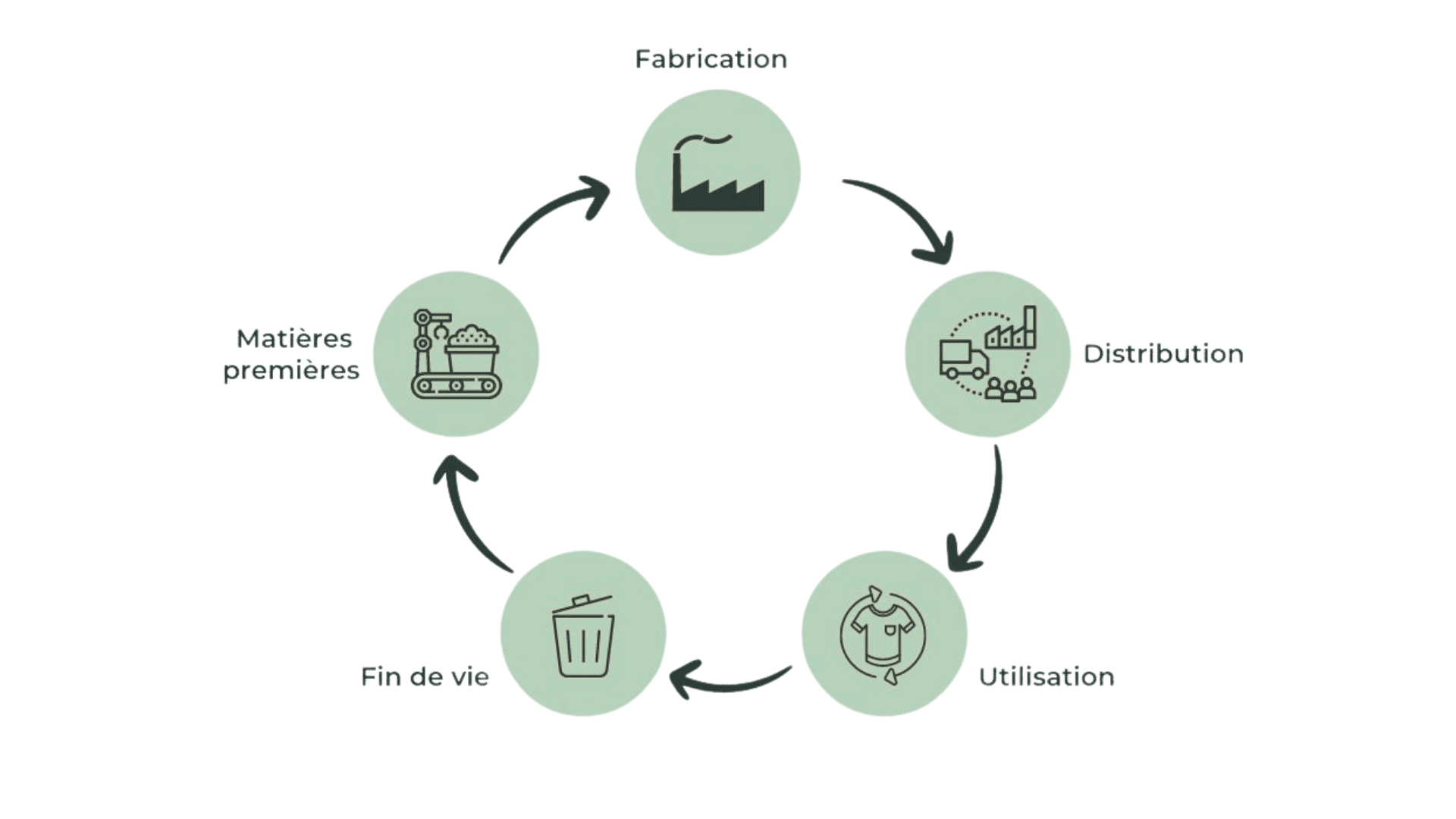
All successive stages in the life of a product, from raw material extraction through to end of life, including use and transport to the end user.

12. Environmental impact
All criteria of human activity that alter the environment and biodiversity compared to a zero baseline, prior to the start of that activity. ADEME defines environmental impact as “all modifications of the environment (negative or positive) caused by a project, organisation or product, from its design to its end of life”.
13. Carbon footprint / carbon balance
Measurement of greenhouse gas emissions generated by an activity or product, calculated in CO2 equivalent (CO2e). For a company or industrial activity, this balance is calculated over a defined period (often 1 year).
14. CO2 emissions
Quantity of CO2 emitted by human activities, including the production of consumer goods and services. More accurately expressed as CO2e, as other gases also have a strong impact on climate change, such as methane or nitrous oxide. All such gases, collectively contributing to climate change, are referred to as greenhouse gases (GHGs).
15. Carbon neutrality / net zero
A state of global balance between anthropogenic greenhouse gas (GHG) emissions and their removal from the atmosphere by human activity. Carbon neutrality was defined in 2015 under the Paris Agreement, with signatory countries committing — and engaging their companies — to reducing the impact of their activities.
16. Environmental score / environmental display
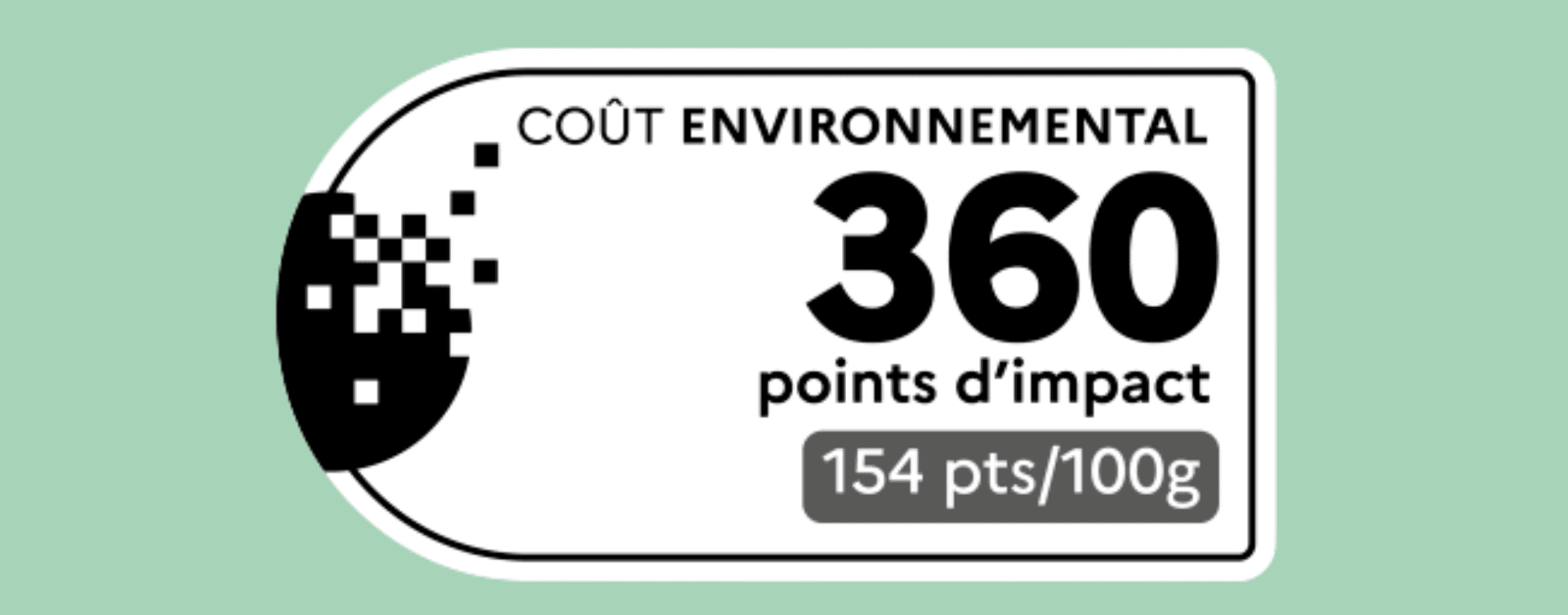
A score or rating according to a method predefined by the sector, measuring the impact of a product on natural resources and the environment. For example, the Climate and Resilience Act (2021) in France proposes a visual label for textiles and clothing aimed at consumers, to combat fast fashion.

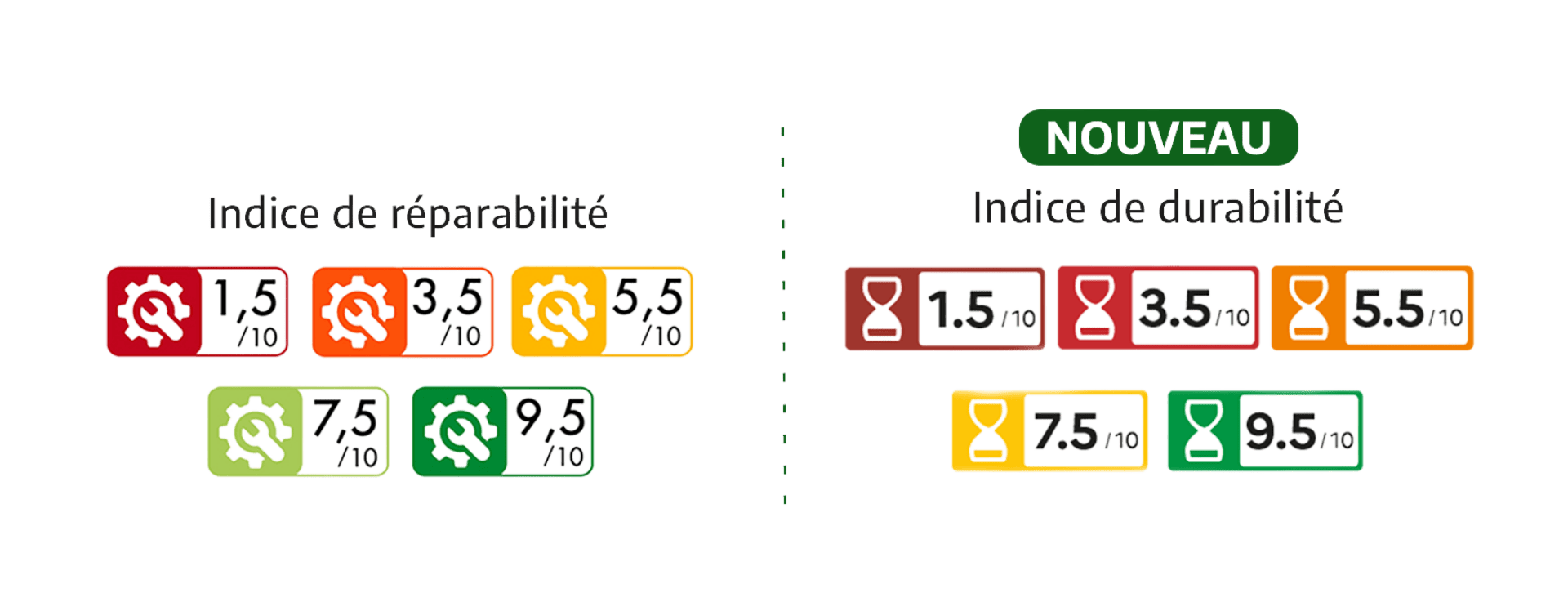
17. Durability index
A rating system enabling consumers to be informed objectively of a product’s capacity to last longer than another, whilst limiting its environmental impacts. In France, the display of a durability index is mandatory on certain household appliances and televisions, pursuant to Article 16-II of the AGEC Act.
18. Environmental Performance Index (EPI)
Standardised worldwide in 180 countries. It measures a company’s capacity to reduce its negative environmental impact whilst improving its management of natural resources.
Energie & Sobriété
19. Responsible consumption
The act of an economic agent (the consumer) who uses (final consumption) or transforms (intermediate consumption) goods and services. Responsible consumption is the end consumer’s choice of products with a lower environmental impact than their standard equivalents.
20. Energy sobriety
Questioning our needs and satisfying them whilst limiting their environmental impact. Reducing energy demand — itself linked to demand for goods and services — is a key factor in achieving carbon neutrality.
21. Energy efficiency
Essentially, achieving the same production results whilst consuming less energy. Central to the approach of sustainable development and environmental protection, as it enables energy consumption to be reduced without compromising competitiveness at the scale of a production system.
22. Renewable energy
Energy from natural sources that renew at a rate faster than their consumption. Sunlight, wind and river water are examples of energy resources that renew without human intervention.
Materials & Resources
23. Raw materials
Sources of material and energy accessible economically in the natural environment in primary form before transformation by human activity. Examples: iron ore, fresh water, rock-derived sand.
24. Bio-sourced materials
Materials partially or wholly derived from biomass such as wood (raw timber and bonded chipboard), hemp, rapeseed, miscanthus, straw, flax shives, cork, corn cobs, reeds, sheep wool, duck feathers… As opposed to bio-sourced materials, one often refers to petro-sourced materials (derived from petroleum).
25. Post-consumer recycled materials (PCR)
“Post-consumer” recycled materials come from consumer waste sources — i.e. materials that have been used and discarded (paper, newspapers, cardboard, cans, plastics, metals). Distinguished from post-industrial waste (PIW) recycled materials.
26. Post-industrial waste (PIW)
Post-production recycled materials consist of production waste, offcuts and non-conforming products. They are always reused in virgin material but do not constitute “Post Consumer Recyclate” (PCR) within the meaning of the PPWR.
27. Material substitution
Replacement of a polluting material or process with a more ecological alternative (bio-sourced material, recycled material, lower-impact material).
Circularity & End of Life
28. Circular economy
A model of production and consumption based on a system other than the linear economy, designed to minimise waste and preserve natural resources, biodiversity and the climate, whilst maintaining the economic sustainability of businesses and employment.
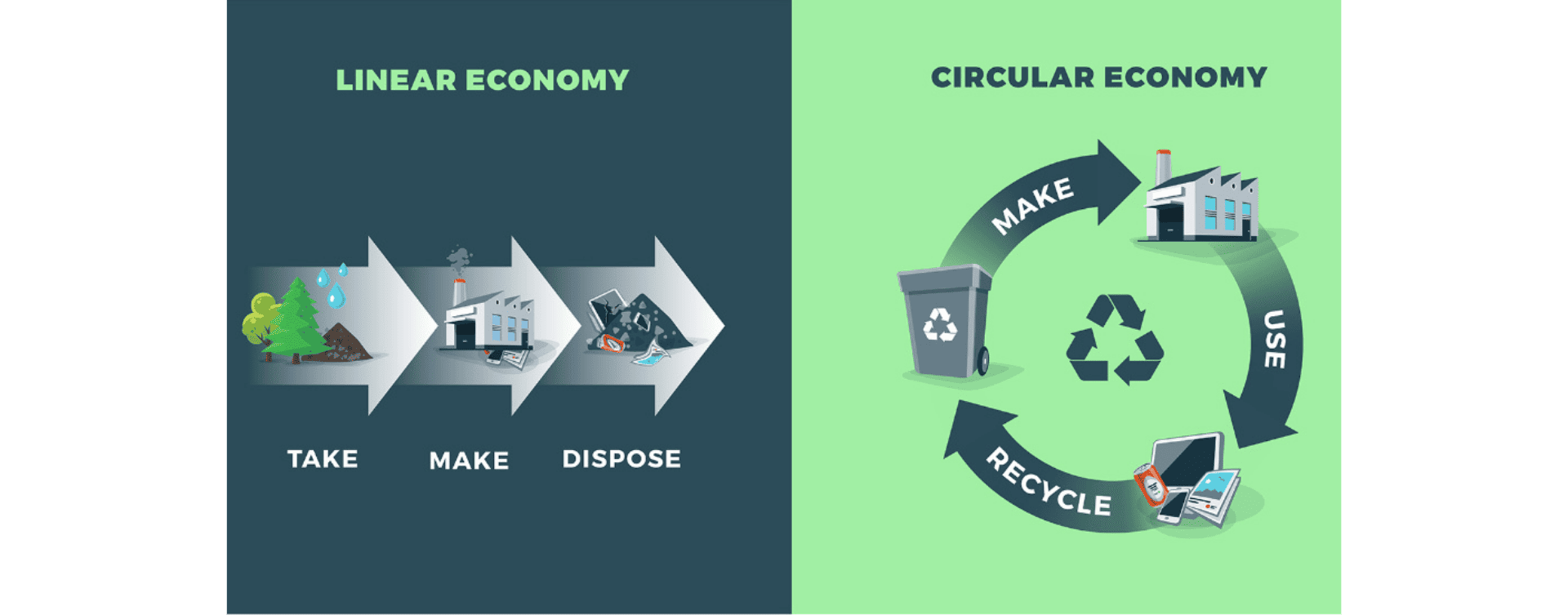
29. Linear economy
An economic model based on a one-way flow of resources and value: extract → produce → consume → discard. With little or no reuse, repair, reprocessing or recycling at end of life.
30. Functional and cooperative economy
Providing companies, individuals or territories with integrated solutions of services and goods, based on the leasing or use of a product rather than the product itself. Examples: city-wide bicycle rental schemes for citizens; Michelin charging transport companies for tyres by the kilometre driven; Canon charging companies per print rather than per printer.
31. Recyclability
The effective recycling capacity of waste arising from identical (household) or other (industrial) products, to produce new products.
32. Reuse
Enabling a material or product placed on the market, which has already had a first life, to be given a second life for the same use. Applies to goods before they are classified as waste. Reuse occurs before the transition to waste status, as part of a second-life approach.
33. Repair & maintainability
All solutions put in place to promote repair or encourage the replacement of defective parts for products sold to consumers or professionals.
34. End of life
The stage at which a product is no longer used and is discarded. The different possible end-of-life options are: recycling, landfill, composting or energy recovery.
35. Upcycling
Recovery of waste into products of superior quality or value, often for craft purposes. For example, Ostrea is a French company that creates innovative materials from shellfish (oysters, scallops…) upcycled for more responsible interior design.

© Ostrea.fr
36. Downcycling
Recycling of material following its discard, resulting in a loss of quality of the recovered and recovered material. Example: broken bricks and roof tiles collected at waste disposal sites, reground by specialist contractors and used as road sub-base.
37. Recycling (generic sense)
Recycling in a broad sense, without specifying whether it involves an identical application or a less qualitative one.
38. Excess packaging (PPWR definition)
Packaging that does not fulfil its protective function and may mislead the consumer as to the quantity. The PPWR therefore requires producers to review packaging presenting empty space, targeting in particular promotional packs and e-commerce parcels sent by marketplace platforms.
Standards, Labels & Governance
39. Ecolabel
Certification guaranteeing environmental performance. The European Ecolabel is the only label valid across all of Europe. It sets different requirements depending on the sector: animal feed, paints and solvents, cosmetics, detergents, tourism, electronics, gardening products, etc.
40. ISO 14000 series
Set of standards governing sustainable design practices.
41. ISO 14001
Standard establishing comprehensive environmental management criteria for a company. The next update to the standard is scheduled for March 2026 (source: Bureau Veritas).

42. ISO 14040/14044
Standard relating to life cycle analysis and eco-design. It covers LCA and life cycle inventory (LCI) studies but does not describe LCA technique in detail as the PEF (Product Environmental Footprint) — the European methodology — does. Updated in 2022.

43. CSR (Corporate Social Responsibility)
The voluntary integration of ethical, social, environmental and economic considerations into company management and its relationships with stakeholders. In France, companies with more than 1,000 employees have mandatory ESG reporting obligations. These are governed by the European CSRD directive (Corporate Sustainability Reporting Directive), adopted in 2022.
44. Ecological transition
A broad concept of a less ecosystem-impacting way of living and producing. Defined in 2005 by Rob Hopkins, following numerous engagements with towns and communities wishing to demonstrate that an alternative way of life was possible within an existing economic system.
45. Greenwashing
A deceptive marketing practice claiming ecological benefits. Greenwashing also refers to the act of highlighting the more ecological nature of a product or service through excessive communication relative to the product’s overall environmental impacts.
46. Planned obsolescence
All techniques designed to reduce the lifespan or useful life of a product in order to encourage the purchase of new ones. This means that certain products are designed to become unusable or ineffective after a certain period due to software or repair tool incompatibility.
47. Perceived obsolescence
The human feeling of being prompted to replace a device prematurely, driven by social media communications or advertising that denigrates older models.
Value Chain & Procurement
48. Supply chain
All processes and associated information relating to the procurement of materials necessary for production, the operation of machinery and the delivery of products from design to the end customer.
49. Responsible purchasing / sustainable sourcing
Selection of suppliers that respect environmental criteria and make available to the client proof of the origin and mode of transport of supplied products.
Risks & Hazards
50. Pollution
Degradation of the environment by substances (natural, chemical or radioactive) released during production or incineration, or various nuisances (acoustic, light, thermal, biological, etc.) that degrade the quality of natural ecosystems.
51. Toxicity
The harmful nature of a substance for health or the environment.